

Choosing the wrong wetsuit thickness is the fastest way to cut a surf session short. Too thin and you're shivering after 20 minutes. Too thick and you're overheating, restricted, and fighting your suit instead of the waves.
Here's everything you need to know to get it right for UK and Irish waters.
Why Wetsuit Thickness Matters More in the UK and Ireland
Water temperatures around the British Isles and Irish coastline range from around 7°C in winter to 17°C in a good summer — and that's a huge range. Unlike warmer destinations where a single suit covers most of the year, UK and Irish surfers typically need at least two suits to surf comfortably year-round.
The good news: get the right thickness and you'll barely notice the cold.
The UK and Ireland Wetsuit Thickness Guide
2mm — Summer (July–September)
Water temp: 15–17°C
Best for: warm days, short sessions, SUP, bodyboarding
A 2mm shorty or full suit is enough when the water is at its warmest. Lightweight, easy to move in, and quick to dry.
3/2mm — Spring and Autumn (April–June, October)
Water temp: 12–15°C
Best for: most UK surfers' go-to suit
The most versatile suit in the range. Warm enough for cooler days, light enough for longer sessions. If you're only buying one suit, make it a 3/2mm.
4/3mm — Early Winter (November–December)
Water temp: 9–12°C
Best for: committed surfers who don't stop when it gets cold
You'll want a hooded suit or a separate hood at this point. The extra millimetre makes a significant difference when water temperatures drop below 12°C.
4/4mm — Winter (December–February)
Water temp: 7–10°C
Best for: surfers who want maximum warmth at winter thickness without stepping up to a 5/4mm
A full 4mm all-over suit with hood gives you serious insulation for the coldest UK and Irish winter sessions — warmer than a standard 4/3mm, more flexible than a 5/4mm. The sweet spot for committed winter surfers on the Atlantic coast.
5/4mm — Mid Winter (January–February)
Water temp: 7–9°C
Best for: cold water specialists, exposed Atlantic coastlines, Scotland, Norway, Iceland
Maximum insulation for the coldest conditions. If you're surfing Thurso in January or the west coast of Ireland in February, this is your suit.
6/4mm — Extreme Cold
Water temp: below 7°C
Best for: the most committed cold water surfers
Reserved for the coldest conditions on the planet. Pairs with boots, gloves, and a hood as standard.
Does Neoprene Quality Affect Warmth?
Yes — significantly. Not all 3/2mm suits are equal. A 3/2mm suit made from 100% Yamamoto limestone neoprene will run noticeably warmer than a standard petroleum-based 3/2mm, because Yamamoto's closed-cell structure retains heat more efficiently and absorbs virtually no water.
In practice, this means you can often go one thickness lighter with a Yamamoto suit and stay just as warm — with the added benefit of more flexibility and less weight.
What About Boots, Gloves, and Hoods?
From October onwards, extremities get cold fast. As a rough guide:
- Boots — from October, especially on exposed beaches
- Gloves or mitts — from November
- Hood — from November, or year-round in Scotland and exposed Atlantic spots
A hooded 5/4mm or 6/4mm suit with boots and mitts is a full cold water system that'll keep you in the water through the worst of a UK winter.
Which Lunasurf Wetsuit Is Right for You?
Men's
- Spring/Autumn → XENO 3/2mm or Alpha 4/3 Front Zip
- Early Winter → Alpha All 4mm Hooded
- Winter → Core-X 4/4 Hooded
- Deep Winter → Core-X 5/4 Hooded
- Extreme cold → Core-X 6/4 Hooded
Women's
- Spring/Autumn → Alpha 3/2 Front Zip or Alpha 4/3 Front Zip
- Early Winter → Valkyrie 4/3 Front Zip
- Deep Winter → Alpha 5/4 Hooded
- Extreme cold → Valkyrie 6/4 Hooded
Not sure about sizing? Check our Wetsuit Size Guide for help finding your fit.



Share:
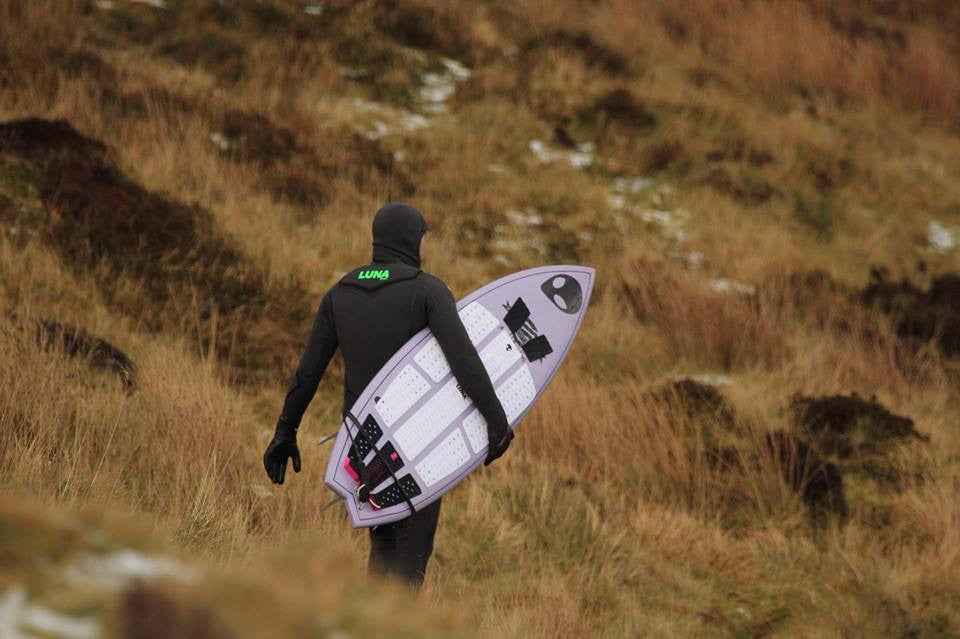
Ian Battrick Surfing Thurso Scotland – Core X 4/4 Hooded Wetsuit & Cold Water Gear
Yamamoto Neoprene vs Standard Neoprene — Is It Worth It?