

If you've been shopping for a premium wetsuit, you've probably seen the word Yamamoto everywhere. But what actually is it, why does it cost more, and does it make a real difference in the water?
Here's the honest answer.
What Is Yamamoto Neoprene?
Yamamoto Corporation is a Japanese manufacturer that has been producing neoprene since 1964. Unlike standard neoprene — which is made from petroleum-derived rubber — Yamamoto produces their chloroprene rubber (CR) from limestone sourced from Mt. Kurohime in Japan, one of the world's purest limestone deposits containing 99.7% calcium carbonate.
Instead of petroleum-derived oil in the manufacturing process, Yamamoto uses food-grade pure canola oil — the same oil used for cooking in Japan. The result is a fundamentally different material to anything else on the wetsuit market.
Warmth
Yamamoto's neoprene uses a nitrogen gas-infused closed cell structure. Each individual cell is packed at extremely high density and filled with nitrogen gas to prevent water penetration and maximise heat retention. The closed cell content is over 93% — more than 30% higher than most competing materials.
The practical result: water absorption is virtually zero. Standard petroleum neoprene absorbs significantly more water, and water conducts heat away from your body 25 times faster than air.
A Yamamoto suit stays drier inside and out throughout your session, which means it stays warmer for longer. A Yamamoto 3/2mm will typically feel warmer than a standard 4/3mm — meaning you can go one thickness lighter and stay just as comfortable.
Verdict: Yamamoto wins, significantly.
Flexibility
This one needs an honest explanation. Out of the box, dry, standard neoprene can actually feel more flexible than Yamamoto — and if you've tried on a Yamamoto suit for the first time in a shop, you might have noticed it feels slightly stiffer than expected.
Here's why that matters: standard neoprene loses its stretch rapidly. Within months of regular use, it degrades and becomes restrictive. The flexibility you felt on day one is largely gone by the end of your first season.
Yamamoto neoprene breaks in over several uses and reaches its full stretch potential after a few sessions in the water. Once broken in, it outperforms standard neoprene significantly — and crucially, it holds that performance for years, not months.
Yamamoto's honeycomb closed cell structure gives the rubber long-term stretch without sacrificing insulation. Their top-grade rubber — used across every Lunasurf wetsuit, boot, glove, and mitt — delivers exceptional stretch that moves with your body, without the excessive elasticity that causes standard neoprene to lose its shape and insulation over time.
Verdict: Yamamoto wins — but give it a few sessions to break in. The performance you feel once it's broken in is the performance you'll still have in year three.
Weight
Because Yamamoto neoprene absorbs so little water, the weight of the rubber remains nearly identical in wet or dry conditions. Standard neoprene gets progressively heavier as it absorbs water during a session — adding drag and fatigue over time.
Verdict: Yamamoto wins.
Durability
Yamamoto has conducted real-world weather resistance testing — exposing their #39 rubber alongside competitor materials to natural UV, ozone, wind, rain, and temperature fluctuations, and measuring how long each took to break down. The results speak for themselves. Yamamoto's CR rubber significantly outlasts standard neoprene, and crucially, essential properties like insulation and flexibility deteriorate in standard neoprene long before it physically breaks.
This changes the value calculation significantly. A £350 Yamamoto suit that lasts 5 years costs less per session than a £180 standard suit that needs replacing every 2 years.
Verdict: Yamamoto wins.
Skin Safety
Unlike natural rubber (NR), Yamamoto's CR doesn't contain latex, which can cause serious allergic reactions. CR also requires far fewer chemical additives than natural rubber — reducing the risk of skin irritation. Wetsuits exist to protect bodies, not damage them.
Verdict: Yamamoto wins.
Eco Credentials
Petroleum oil is expected to be depleted within the next 50 years. Limestone, by contrast, can be utilised as a wetsuit material semi-permanently. Yamamoto uses food-grade canola oil rather than petroleum derivatives in production, and powers their manufacturing primarily from renewable energy sources including hydroelectricity.
In March 2023, Yamamoto became the first company in the wetsuit materials industry to shift 100% of the electricity used in their factory and office to renewable energy — a significant milestone that reflects their long-term commitment to sustainability without compromising on quality or performance.
Yamamoto is also actively working on recycled jersey lining materials to reduce ocean plastic pollution — the same recycled thermal lining used in Lunasurf wetsuits.
The longer lifespan of a Yamamoto suit further reduces its environmental footprint compared to replacing cheaper suits more frequently.
Verdict: Yamamoto is meaningfully better — and improving.
So Is It Worth It?
If you surf regularly in cold water — whether that's the UK, Ireland, Norway, Iceland, Canada, Japan, or anywhere the ocean demands serious insulation — yes, unequivocally. The warmth, flexibility, durability, and safety advantages are immediate in the water, and a Yamamoto suit that outlasts two or three standard suits pays for itself many times over.
If you surf occasionally in warmer water, a standard neoprene suit will do the job at a lower upfront cost.
For cold water surfers who take their time in the water seriously, there's no real argument for standard neoprene once you've surfed in Yamamoto.
How to Care for Your Yamamoto Wetsuit
A Yamamoto wetsuit will last years longer than standard neoprene — but only with proper care. Here's how to get the most from it:
- Getting in and out — avoid pulling or pinching the material with your fingers. Handle it as gently as possible, or put it on and take it off in the water to reduce stress on the material.
- After every session — rinse gently with fresh water and dry thoroughly in a well-ventilated, shaded area. Chlorine, salt, direct sunlight, and high temperatures all accelerate deterioration.
- Storage — don't hang your wetsuit on a thin hanger. Use a thick hanger, or fold it at the waist with cushioning at the fold to prevent creasing. Prolonged stretching on thin hangers causes cracking around the shoulder panels.
Lunasurf and Yamamoto
Every Lunasurf wetsuit, boot, glove, and mitt is made from 100% Yamamoto limestone neoprene. We don't offer a standard neoprene option — because we don't think it's good enough for the conditions our customers surf in. From your suit to your extremities, every piece of Lunasurf rubber is the same premium Yamamoto material — so there's no weak link in your cold water system.
Because we're passionate about making premium Yamamoto wetsuits accessible, we work with a carefully selected network of retailers and sell direct — so you get 100% Yamamoto neoprene at prices that would otherwise only be possible with cheaper materials.
Men's
- Spring/Autumn → XENO 3/2mm or Alpha 4/3 Front Zip
- Winter → Core-X 4/4 Hooded or Alpha All 4mm
- Deep Winter → Core-X 5/4 Hooded
- Extreme cold → Core-X 6/4 Hooded
Women's
- Spring/Autumn → Alpha 3/2 Front Zip or Alpha 4/3 Front Zip
- Early Winter → Valkyrie 4/3 Front Zip
- Deep Winter → Alpha 5/4 Hooded or Valkyrie 5/4 Hooded
- Extreme cold → Valkyrie 6/4 Hooded
Not sure which suit is right for you? Read our Wetsuit Thickness Guide or check our Size Guide.
See It in Action
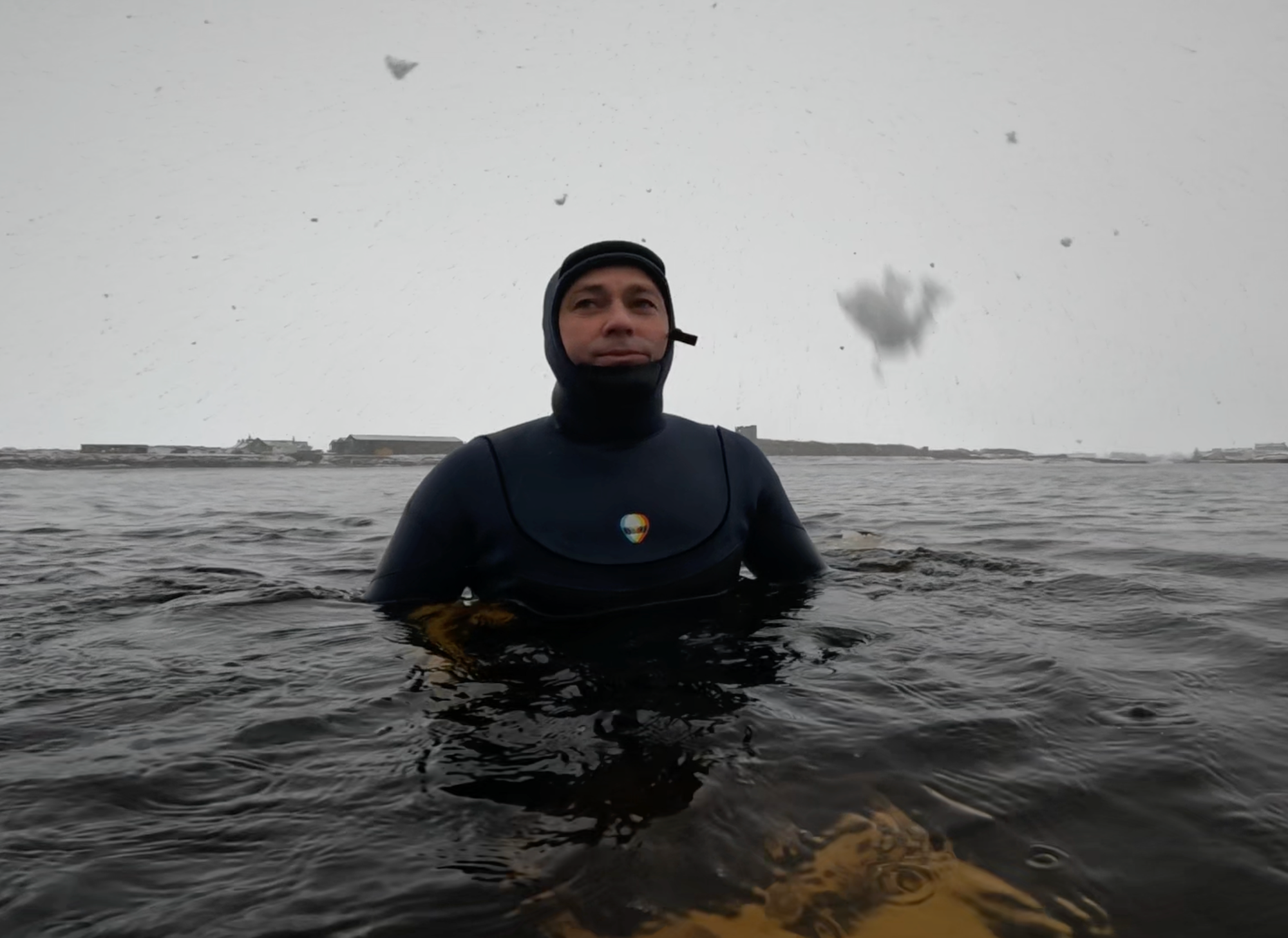
This is what Lunasurf gear is built for. Cold Water Surfing in Iceland — Journey to the Centre of the Surf | Arctic Waves Adventure. Self-filmed over years of chasing Arctic swells on Iceland's wild, frozen shores.



Share:
What Wetsuit Thickness Do I Need for UK and Irish Surfing?
Yamamoto Wetsuit Boots | 4mm & 8mm Cold Water Surf Boots